
My goal
Understanding Hypertension and Lipids
Understanding the interplay between hypertension and dyslipidemia is key to effective treatment strategies. Here, we review recent findings and their implications for practice.
For informational purposes only and does not replace professional medical advice. Always consult a licensed healthcare provider for concerns about your health.

Latest in hypertension & lipids
New research continues to shed light on how blood pressure and cholesterol management can reduce cardiovascular risk. Stay updated with summarized studies and expert analysis to inform your clinical practice and patient guidance.

Hypertension and Lipid Updates
Stay informed with the latest research on blood pressure management and lipid control to improve cardiovascular health.



-
Evolucumab in high-risk ‘primary prevention’
-
Olezarsen: A new option for severe hypertriglyceridemia
Lay Summary
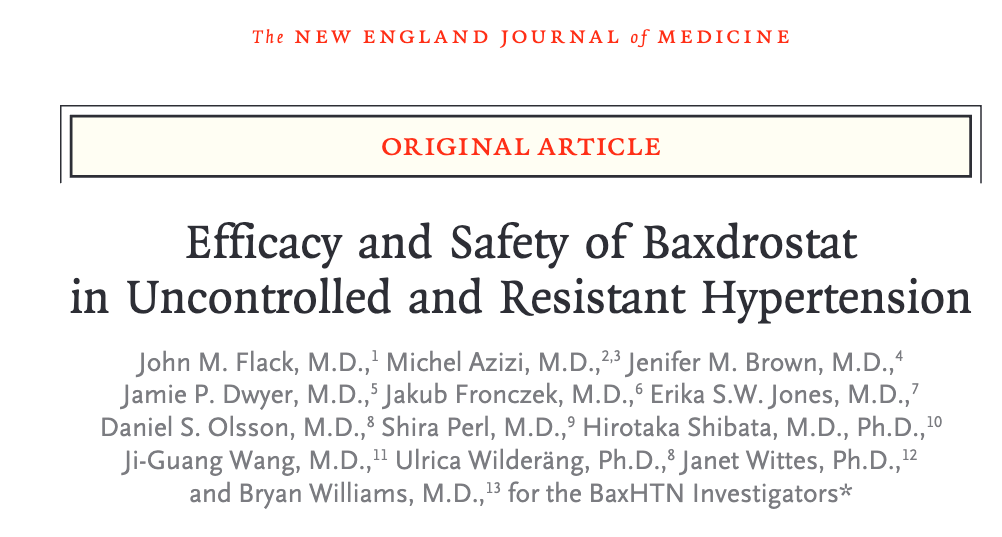
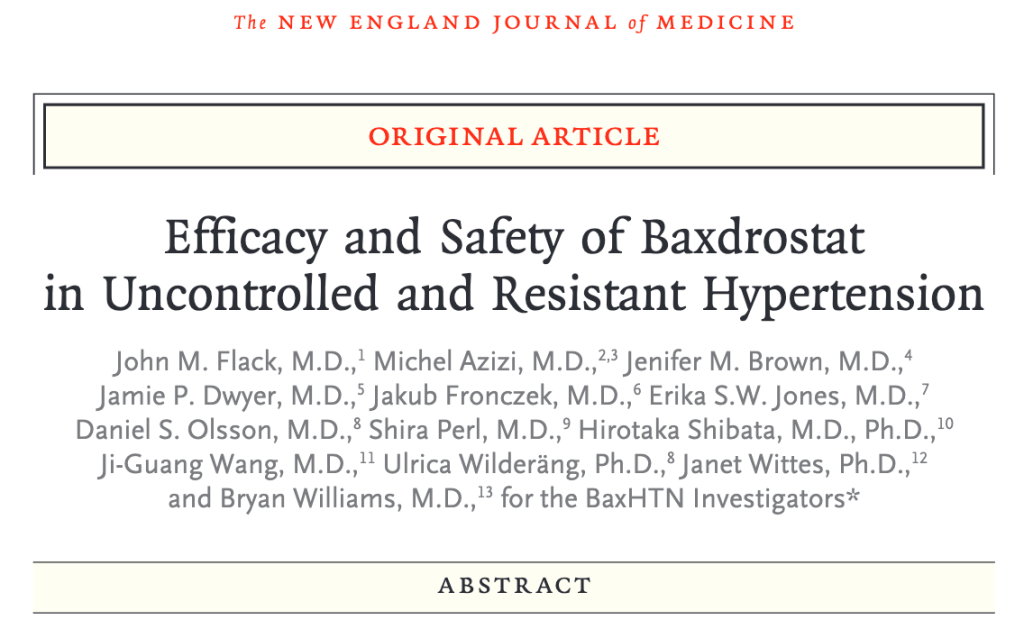
This study tested a new drug called baxdrostat to help people with high blood pressure that’s hard to control, even with multiple medications. Some people had “uncontrolled” hypertension (needing 2 drugs) or “resistant” hypertension (needing 3 or more drugs, including a diuretic). The goal was to see if baxdrostat could lower blood pressure better than a placebo (a pill with no active drug) and if it was safe.
What They Did: The researchers studied 794 people from many countries. Everyone had high blood pressure (around 149 mm Hg systolic, the top number) despite taking their usual medications. After a 2-week period where everyone got a placebo, they were split into three groups for 12 weeks: one got 1 mg of baxdrostat, another got 2 mg, and the third got a placebo, all while continuing their regular drugs. The main focus was how much their systolic blood pressure dropped by week 12. They also checked other things, like diastolic blood pressure (the bottom number) and side effects.
What They Found: Baxdrostat worked well. People taking 1 mg saw their systolic blood pressure drop by about 14.5 points, and those on 2 mg saw a drop of about 15.7 points. The placebo group only dropped 5.8 points. This means baxdrostat lowered blood pressure by about 8.7–9.8 points more than the placebo, which is a big improvement. It also helped lower diastolic blood pressure and got more people (about 40% in both baxdrostat groups vs. 19% in placebo) to a healthy blood pressure level (below 130 mm Hg systolic). In a later part of the study, when some people switched from baxdrostat to placebo, their blood pressure went back up, showing the drug was making a difference.
Safety: The drug was mostly safe. A few people (2–3% on baxdrostat vs. 0.4% on placebo) had high potassium levels in their blood, which can be a concern but was manageable. One person in the placebo group passed away, but it wasn’t linked to the study. Other serious side effects were rare.
Bottom Line: Baxdrostat, when added to other blood pressure drugs, significantly lowered blood pressure in people who were struggling to control it. It seems like a promising option with mostly mild side effects, but doctors would need to monitor potassium levels. The study was funded by AstraZeneca, the company making the drug.
Commentary
- Many options exist for the treatment of hypertension. First line agents include drugs from the following classes: calcium channel blockers, ACE inhibitors, angiotensin receptor blockers, thiazide diuretics.
- Spironolactone, a mineralocorticoid receptor antagonist, is often added fourth-line in patients with resistant hypertension. In patients who have been diagnosed with primary aldosteronism it is used first-line.
- Additional options in patients who remain uncontrolled, or if first-line agents are not tolerated, include beta-blockers, alpha blockers, hydralazine, clonidine. These are less well tolerated options.
- Additional classes are under development. The aldosterone synthase inhibitor class shows promise because the BP reduction is clinically useful and the adverse effect profile is improved relative to spironolactone. These drugs may replace spironolactone in clinical practice (eventually). One issue will be pricing and accessibility.
- I should also note we don’t have head-to-head data comparing drugs like baxdrostat to spironolactone. This would be useful to confirm that the BP reduction with these newer agents is similar to that of the gold standard in this broad group of drugs.
 Hypertension Lipid Insights