Lay Summary
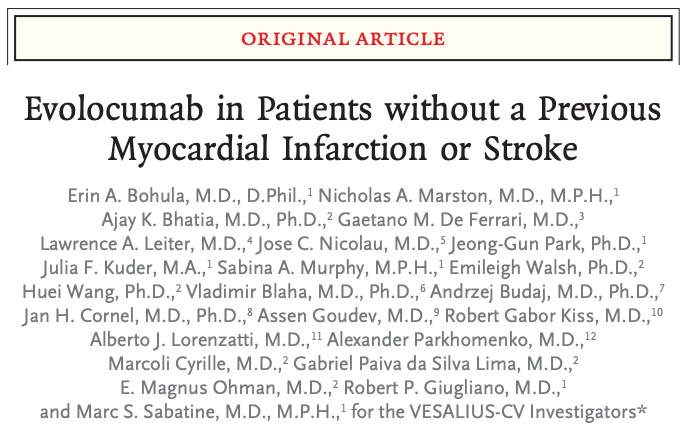
A large clinical trial called VESALIUS-CV tested whether the cholesterol-lowering drug evolocumab could prevent first-time heart attacks, strokes, or related events in high-risk people who had never experienced these problems before. The study included over 12,000 adults with an average age of 66, of whom 43% were women. All participants had either atherosclerosis (plaque buildup in arteries) or high-risk diabetes, along with elevated “bad” cholesterol (LDL at least 90 mg/dL) despite usual treatments. Most were already taking statins, and many had additional risks like diabetes or smoking.Participants were randomly assigned to receive either evolocumab (140 mg injected every two weeks) or a placebo injection, while continuing their regular cholesterol medications.
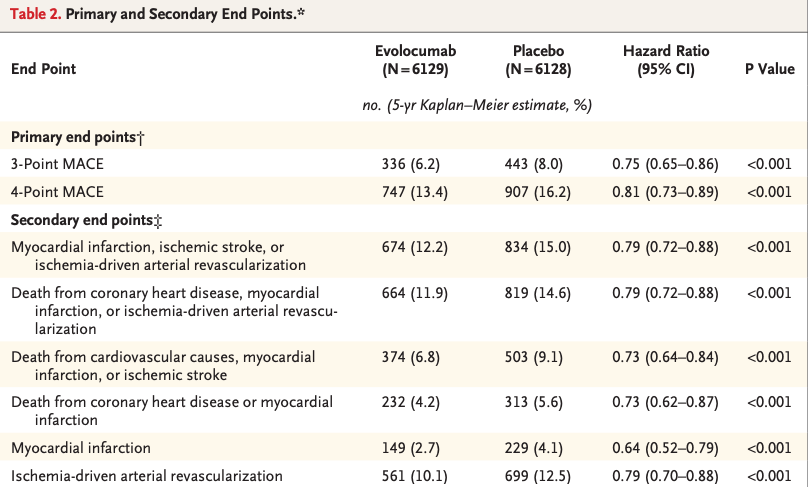
Over an average follow-up of 4.6 years, evolocumab dramatically lowered LDL cholesterol—by 55% within a year—bringing levels down to about 45 mg/dL compared to 109 mg/dL in the placebo group. The results showed clear benefits. The risk of a first major event—defined as death from heart disease, heart attack, or ischemic stroke—was 25% lower with evolocumab (6.2% of patients affected versus 8.0% on placebo). When including the need for artery-opening procedures, the overall risk dropped by 19% (13.4% versus 16.2%). Evolocumab also reduced heart attacks by 36% and artery procedures by 21%. Importantly, the drug was safe, with no increase in side effects compared to placebo.
In simple terms, adding evolocumab to standard care safely prevents initial heart attacks, strokes, and related procedures in high-risk patients without prior events—a major step forward in primary prevention of heart disease. The findings were published in the New England Journal of Medicine on November 8, 2025, and the study was funded by Amgen, the maker of evolocumab.
Comments
- PCSK-9 inhibitors like evolucumab, alirocumab, and inclisiran are highly effective at reducing LDL-C and cardiovascular events.
- This high-risk ‘primary prevention’ trial showed clinically important reductions in cardiovascular disease and death. It is important to note the high-risk status -either known atherosclerosis (which, IMHO is really secondary prevention) or diabetes. The median baseline LDL-C was around 115 mg/dL or 3.0 mmol/L, which is at least moderately elevated, particlularly in patients at high-risk. It was dropped by 55% in evolocumab treated subjects compared to placebo treated subjects. The achieved medial LDL-C at 48 weeks was 45 mg/dL or 1.16 mmol/L in the evolocumab group and 109 mg/dL or 2.82 mmol/L in the placebo group.
- There is no doubt in my mind that driving LDL-C (or all apo B containing particles) as low as possible is the best way to avoid plaque development and really minimize the lifetime risk of atherosclerosis. Proper nutrition and regular exercise and control of other risk factors (blood pressure, blood glucose, smoking avoidance) are also important. Some would consider this a controversial statement, but the published evidence from randomised controlled trials, high-quality cohort studies (Mendelian randomization data ; consideration of the natural history of those with detrimental and favourable genetic mutations) is incontrovertable.
- This trial supports extension of use of these very effective agents, which are virtually devoid of side effects. I cannot wait for the day when these agents are affordable and accessible to all who wish to take them.
 Hypertension Lipid Insights
Leave a comment